Optimization Algorithms
Particular emphasis is placed on numerical optimization, heuristic search, swarm intelligence, and hybrid optimization frameworks for complex industrial problems requiring feasible, stable, and efficient solution strategies.
Research-oriented CV
Numerical Optimization, Heuristic Algorithms, Deep Reinforcement Learning
Production Scheduling, System Simulation, Industrial Engineering
Location: Taiyuan, Shanxi, China
Email: smushdown@gmail.com / 202005031108@zjut.edu.cn
Phone: 13044487177
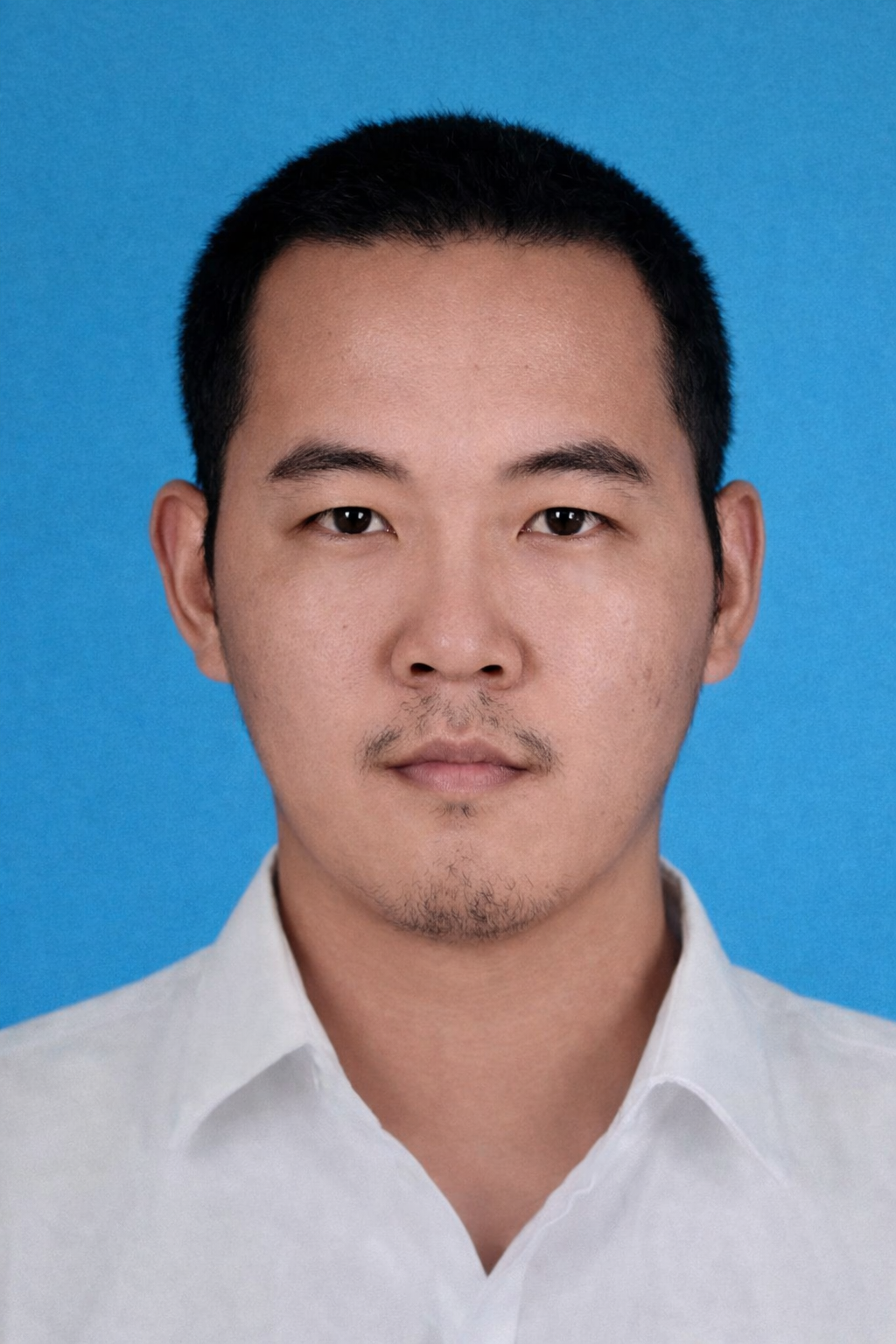
Graduated from Zhejiang University of Technology with a bachelor's degree in Industrial Engineering, with formal training in system modeling and simulation, operations research, optimization algorithms, machine learning, lean production, mechanical design, and supply chain management. A solid methodological foundation has been developed through paper collaboration, competition projects, logistics planning, and industrial practice.
Current representative work focuses on multistage stochastic blending optimization for recycled copper alloys. The main research line centers on integrating numerical solution methods with heuristic algorithms to address practical optimization problems in manufacturing and process industries, with effectiveness assessed through system simulation, experimental analysis, and engineering constraints. The combination of algorithm design and simulation has supported a relatively complete workflow spanning problem formulation, solution validation, and result interpretation.
In addition, systematic familiarity has been established with the application of deep reinforcement learning, machine learning, and deep learning methods, together with sustained experience in factory investigations, layout planning, and production-system analysis.
Graduated from Zhejiang University of Technology with a bachelor's degree in Industrial Engineering and currently pursuing a master's degree in Industrial Engineering and Management. Research is oriented toward practical optimization problems in manufacturing and process industries, with emphasis on integrating numerical solution methods, heuristic algorithms, and deep reinforcement learning.
Representative work focuses on multistage stochastic blending optimization for recycled copper alloys, with validation supported by system simulation, experimental analysis, and engineering constraints. Sustained experience has also been developed in factory investigation, layout planning, production-system analysis, and research-oriented tool development.
The current research profile is positioned along the chain of algorithm design, industrial problem modeling, and simulation-based validation. The primary objective is to address optimization problems with real process constraints, multistage decision structures, and complex search spaces. Methodologically, emphasis is placed on combining numerical solution techniques, heuristic algorithms, and learning-based methods to improve solution quality, computational efficiency, and engineering applicability.
Existing work covers production scheduling, recycled-alloy blending optimization, environmental control in industrial sericulture, and optimization of assembly and suspension-chain systems, forming a comparatively complete workflow from problem abstraction and mathematical modeling to algorithm implementation, simulation experiments, and result interpretation.
The current target directions are as follows:
Particular emphasis is placed on numerical optimization, heuristic search, swarm intelligence, and hybrid optimization frameworks for complex industrial problems requiring feasible, stable, and efficient solution strategies.
Systematic familiarity has been developed with machine learning, deep learning, and deep reinforcement learning, especially for discrete decision-making, hybrid action spaces, and engineering problems with explicit operational constraints.
Proficient in FlexSim, Simio, Anylogic, Matlab, and SPSS for system modeling, simulation experiments, comparative analysis, and the validation of algorithmic performance in engineering contexts.
The current research profile follows the chain of algorithm design, industrial problem modeling, and simulation-based validation, with particular attention to multistage decision problems, engineering constraints, and the practical applicability of optimization methods in real production settings.
Hu JunHan, Wang Cheng
Status: Under submission to JCLP.
[Paper]
Wen-Bin Zhao, Hu JunHan, Gao-An Zheng
Status: Under submission to CEA.
[Paper]
Chenyu Nan, Hongshi Ruan, Xiaozhe Ju, Junhan Hu, Lihua Liang, Yangjian Xu
Composites Science and Technology, 2024, 246: 110388.
Status: Published.
Author contribution: fourth author.
[Paper]
Wen-Bin Zhao, Hu JunHan, Zi-Qiao Tang
Biomimetics, 2024, 9(9): 571.
Status: Published.
[Paper] [Certificate]
Wenbin Zhao, Junhan Hu, Jiansha Lu, Wenzhu Zhang
Machines, 2024, 12(9): 666.
Status: Published.
[Paper] [Certificate]
Registration No.: 2025SR1169203; Certificate No.: 15825401.
Registration No.: 2025SR1169313; Certificate No.: 15825511.
Registration No.: 2025SR1169559; Certificate No.: 15825757.
Currently pursuing a degree in Industrial Engineering and Management. Current research focuses on practical optimization problems in manufacturing and process industries, with particular emphasis on integrating numerical solution methods with heuristic algorithms, applying deep reinforcement learning to multistage decision problems, and evaluating algorithms and alternative plans through system simulation.
Representative work centers on multistage stochastic blending optimization for recycled copper alloys, involving chance-constrained programming, a hybrid DAH-DDPG strategy, endogenous stopping, and solution as well as validation issues under complex engineering constraints.
In addition, current work is advancing a stochastic lead-time constrained planning model for tree-structured multi-level assembly systems. Starting from a simplified two-level assembly model, the framework is being extended to a K-stage tree-structured assembly setting, where raw-material lead-time uncertainty, interstage assembly timing constraints, holding costs for semi-finished and purchased components, and time-loss penalties are unified in the objective. The goal is to develop a solution approach from a multistage stochastic programming perspective.
Major coursework included system modeling and simulation, operations research, optimization algorithms, machine learning, lean production, mechanical design, enterprise resource planning, automated warehousing design, Six Sigma management, quality management, and supply chain management.
2024.09 - Present Zhejiang University of Technology, Industrial Engineering and Management, Master's Student.
2020.09 - 2024.07 Zhejiang University of Technology, Industrial Engineering, B.Eng.
Participated in four mechanical design competitions and robotics projects, with responsibilities covering structural design, model development, technical drawing, kinematic and mechanical verification, as well as selected work in embedded development, gait design, path-planning algorithms, and machine vision recognition.
Participated in graduate and undergraduate development teams, with responsibility for GUI development and the integration of intelligent algorithm modules. In addition, utility programs such as algorithm-optimization visualization tools were developed for course and project needs. With the support of AI-assisted development, scripts and process-oriented utilities can be produced rapidly to facilitate research workflows. Most graduate course projects were presented in the form of software tools or HTML-based pages.
Long-term involvement has been maintained in factory investigations, production-process analysis, and layout planning. FlexSim-based modeling and simulation, data analysis, and optimization algorithms were applied to logistics planning, course-design projects, and production-line scheduling studies. During industrial internship work, scheduling schemes based on simulation and algorithmic optimization were also proposed and evaluated.
Served multiple times as team leader in competitions and previously held positions including deputy director of the student financial-aid association and department head in the student union of the School of Mechanical Engineering, with responsibilities covering the organization and coordination of student-aid and work-study activities involving approximately 200 participants.
Project and practice experience covers mechanical design competitions, GUI development and research-oriented utility tools, factory investigation, logistics and layout planning, production scheduling studies, and student-team organization, with long-term engagement in simulation-based analysis and optimization-oriented problem solving.
Simulation and Analysis: Anylogic, Simio, FlexSim, Matlab, SPSS
Mechanical Design: SolidWorks, SketchUp, CAD, Catia
Algorithms and Programming: Python, Java, heuristic algorithms, numerical optimization, GUI development, database operation
MLDL and Research Tools: machine learning, deep learning, deep reinforcement learning, LaTeX, Office, data visualization

A PDF version of this page can be generated directly from the browser print dialog. For a clean result, use portrait orientation and disable browser headers and footers in the print settings before saving.